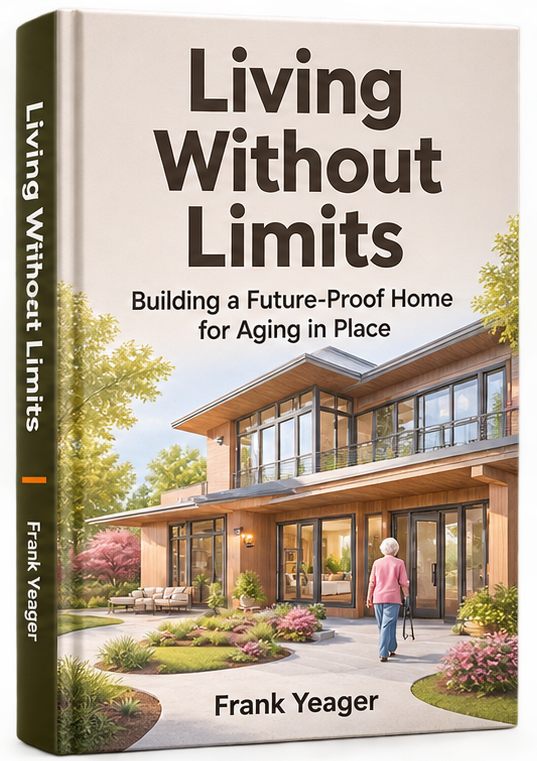
Living Without Limits
Building a Future-Proof Home for Aging in Place
Most people plan for retirement. They plan for healthcare. They plan for their estate.
But what happens when the house itself stops working for them?
A home is often the largest asset in an estate, yet it's frequently the last part of a long-term plan anyone examines.
Living Without Limits introduces a coordinated approach to aging in place that brings property condition, accessibility, financial planning, caregiver needs, and estate optimization together before changing circumstances force expensive decisions.

Aging in Place Begins Long Before a Modification
Planning for aging in place isn't simply about installing grab bars, widening doorways, or replacing a bathtub.
It begins with understanding the home itself.
What condition are its systems in? Which components are approaching the end of their useful lives? How might the occupants' needs change? And which decisions made today could prevent costly rework tomorrow?
Drawing on more than 35 years of construction, inspection, maintenance, and accessibility experience, Frank Yeager presents a framework for answering those questions in a logical, coordinated sequence.
What You'll Discover
Assess Before You Modify
Understand how an aging-in-place assessment differs from a conventional home inspection and how to prioritize findings.
Plan for the Life of the Home
Inventory building systems, anticipate replacement costs, and integrate maintenance into long-term financial planning.

Sequence Accessibility Improvements
Make modifications that address current needs while anticipating future mobility and caregiving requirements.
Protect the Property's Value
Explore how universal design and thoughtful property optimization can support both independence and estate liquidity.

Coordinate the Professionals
Recognize the gaps that can develop between healthcare, construction, financial planning, and estate planning, even when everyone involved is doing their job.

Prepare for Caregiving
Consider the physical, operational, and legal requirements of bringing assistance into the home.
Build for Adaptability
Use durable materials, smart technology, and phased improvements to help the home evolve with its occupants.

Who Should Read This Book?
Living Without Limits is written for homeowners who want to remain in their homes as they age, as well as the professionals helping them make that possible.
It's particularly relevant to estate and financial planners, elder law attorneys, care managers, aging-in-place specialists, contractors, and accessibility consultants.
The book also includes practical worksheets, assessment tools, cost-planning guidance, and resources to help translate planning into action.
The Home Is Part of the Plan
A retirement plan can account for income. An estate plan can address asset distribution. A healthcare plan can anticipate changing medical needs.
But if nobody examines whether the home can support those plans, a critical piece is missing.
Living Without Limits helps bring that piece into focus.


