
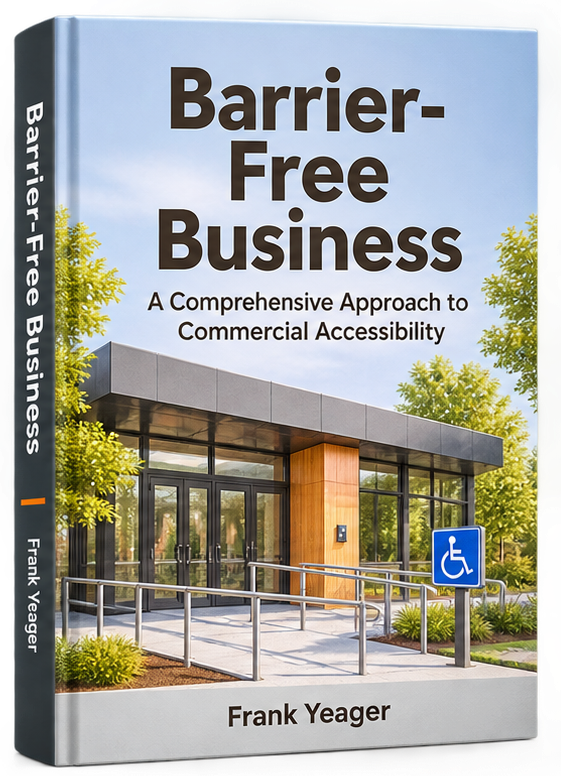
Barrier-Free Business
A Comprehensive Approach to Commercial Accessibility
The ramp is there.
The restroom technically qualifies.
The permit was issued. The inspection passed.
And the space still doesn't work.
Accessibility compliance and accessibility function aren't the same thing.
A commercial property can meet dimensional requirements and still present barriers that prevent customers from entering, navigating, or using its services.
Barrier-Free Business explores the gap between meeting accessibility requirements and creating spaces that actually work for the people who use them.

Compliance Is the Starting Point, Not the Destination
Accessibility isn't simply a construction requirement or a regulatory obligation. It's part of how a business operates, serves customers, manages risk, and protects its property investment.
Drawing on more than 35 years of construction and accessibility experience, Frank Yeager introduces a practical approach that connects compliance, functionality, financial planning, and long-term property performance.
The book builds on the concept of Practical Access: looking beyond whether a feature technically complies to examine whether it functions effectively in everyday use.
What You'll Discover
Commercial Accessibility Audits
Explore the assessment of entrances, parking, pathways, restrooms, signage, service counters, and other customer-facing areas.

Phased Accessibility Improvements
Learn how to prioritize modifications according to urgency, customer impact, cost, and operational disruption.
The Compliance–Function Gap
Understand why meeting technical standards doesn't always produce a usable environment, and how to recognize problems before they become costly.

The Financial Case for Accessibility
Examine available tax incentives, customer access, property value considerations, and the financial consequences of deferred improvements.

Universal Design as Business Strategy
Discover how inclusive environments benefit customers, employees, and visitors across a broad range of abilities.

Accessibility and Legal Exposure
Understand how accessibility deficiencies can create litigation risk and why ongoing assessments and documented improvement plans matter.

Closing the Responsibility Gap
Explore how accessibility problems can survive design, construction, permitting, and inspection, even when individual participants fulfill their assigned responsibilities.

Preparing for Tomorrow
Consider how technology, changing demographics, and evolving customer needs influence long-term accessibility planning.
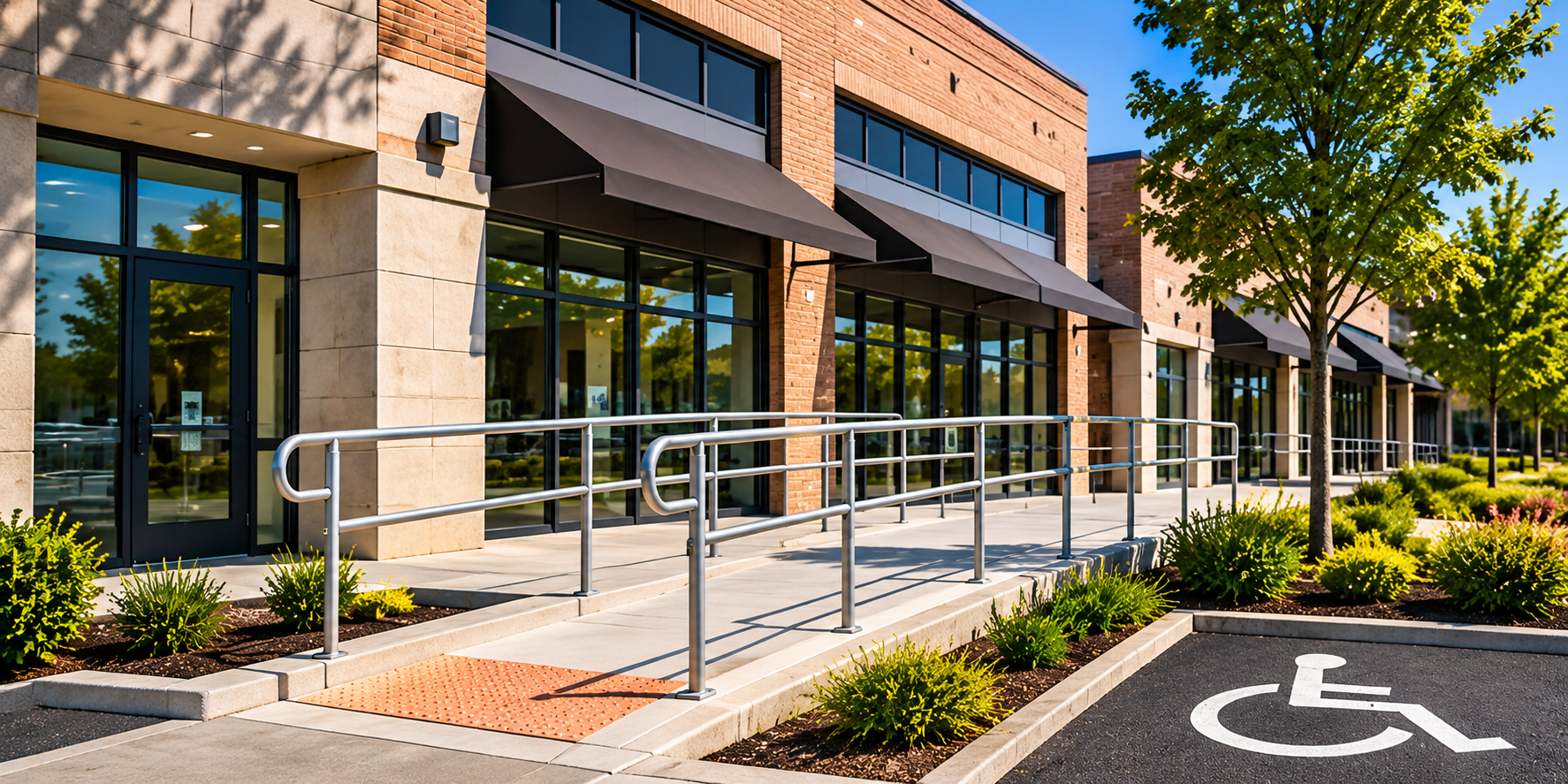
Who Should Read This Book?
Barrier-Free Business is written for commercial property owners, business operators, property managers, and professionals responsible for the accessibility and performance of commercial spaces.
It's also relevant to architects, contractors, accessibility consultants, attorneys, insurers, and risk management professionals.
The book includes implementation checklists, an accessibility action-planning framework, financial incentive references, and additional professional resources.
A Building Can Pass Inspection and Still Fail Its Users
Compliance establishes essential requirements. Functionality determines whether those requirements translate into meaningful access.
Understanding both is the foundation of a more effective accessibility strategy.


